







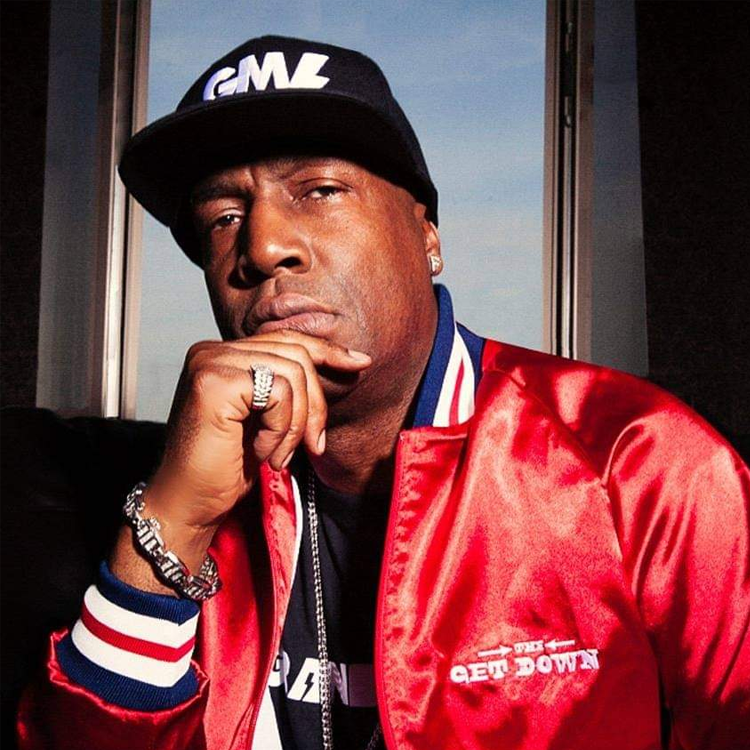

Before Hip-Hop became a billion-dollar global language, it was a Bronx block party, a neighborhood gathering, a feeling. Before the world understood what was happening, Joseph Robert Saddler — better known as Grandmaster Flash — was already looking at music differently.
Born January 1, 1957 in the Bronx, Flash was never just a DJ. He was an innovator, an engineer, and a young scientist with a turntable in place of a laboratory. While studying electronics, he began viewing equipment not as it was designed to be used, but as what it could become.
The turntable was no longer just a machine that played records. It became an instrument.
Through precision, experimentation, and countless hours of trial and error, Grandmaster Flash created the technical foundation that shaped modern DJ culture. His innovations — including the Quick Mix Theory, slipmat technology, cutting, back-spinning, and advanced mixer techniques — transformed the possibilities of vinyl manipulation and forever changed how music could be performed.
In the South Bronx during the 1970s, Flash helped build the blueprint for Hip-Hop’s live experience. By forming Grandmaster Flash and the Furious Five with Melle Mel, Cowboy, Kidd Creole, Scorpio, and Rahiem, he helped establish the powerful relationship between DJ and MC that became a defining element of the culture.
Their groundbreaking 1982 masterpiece, “The Message,” changed the conversation forever. Moving beyond party records, it introduced a raw, socially conscious reflection of urban life and helped open the door for generations of artists who used Hip-Hop as a vehicle for storytelling and truth.
Flash’s influence can be heard throughout music history — from the groundbreaking turntable showcase “The Adventures of Grandmaster Flash on the Wheels of Steel” to “White Lines (Don’t Don’t Do It),” an enduring anthem that tackled the dangers of cocaine addiction.
In 2007, Grandmaster Flash and the Furious Five became the first Hip-Hop act inducted into the Rock & Roll Hall of Fame. He later received the Polar Music Prize in 2019 and the Grammy Lifetime Achievement Award in 2021, honors that represented more than personal achievement — they represented Hip-Hop’s arrival as a respected global art form.
But for Flash, the story has never been about trophies. It has always been about the journey.
His upcoming book “Birth of a Culture”, co-authored with award-winning journalist Robert “Scoop” Jackson and published by Amistad, an imprint of HarperCollins, takes readers deeper into the science, creativity, and problem-solving behind Hip-Hop’s earliest innovations.
Unlike his previous autobiography, “The Adventures of Grandmaster Flash: My Life, My Beats”, this book focuses on the “kid scientist” behind the movement — the young man studying sound, breaking down equipment, and finding solutions to problems nobody else was attempting to solve.
Grandmaster Flash didn’t just play records. He taught the world that innovation comes from curiosity, discipline, and paying attention to every detail.
And decades later, the culture is still moving to the rhythm of ideas he helped create.
Before the world called it Hip-Hop, it was simply your neighborhood. When you close your eyes today, what’s the first sound, smell, or moment that instantly takes you back to those Bronx block parties before anyone realized they were witnessing history?
It takes me back to being a village. When I close my eyes and go back there, it takes me back to love, respect, and caring for each other. I remember times when fans who lived far away would come to my parties; I knew their parents.
When the buses or subway were not running, I would put them in taxis after the party to make sure they got home safely. It made me realize how important that time was. It was a village of love.
You’ve often approached turntables like an engineer instead of simply a DJ. At what point did you realize you weren’t just learning the equipment — you were reinventing what the equipment could do?
There was no “aha” moment ever. I just knew that I had to figure out a mathematical way to capture these short drum moments seamlessly without ever allowing the song to go back to the full instrumentation of the song.
That was not necessarily an “aha” moment. It was a moment of necessity where I had to figure out how to percussively extend and connect a Black drummer with a white drummer, to a foreign drummer, to an American drummer; from pop, rock, jazz, blues, funk, disco, R&B, and alternative.
So, it was more about necessity and what I was trying to accomplish.
Every culture has a creation story, but myths often replace memories over time. Was writing Birth of a Culture your way of setting the record straight while the architects are still here to tell it?
It wasn’t me trying to tell the story to set the record straight. It was simply me telling my story. I’ve always said this culture was not created by just one person. It was created by a multitude of people, and they all have their own stories. I simply wanted to tell my part.
The slipmat, Quick Mix Theory, punch phrasing — today they’re part of DJ vocabulary. Back then, they were solutions to problems nobody else was trying to solve. Did necessity make you an inventor, or were you always wired that way?
I would have to say that I was always wired that way. I’m wired that way today. I like things in order. It’s probably the way I am with everything.
Where things are. How things are working. Are they working efficiently? Are they operating the best they can? So, it’s probably just me and the way that I am wired.
Today’s technology can do in seconds what once took hours of practice and experimentation. What do you think is gained… and what can never be downloaded?
The journey. Because the journey is the learning. The journey is trial and error. Through that trial-and-error journey, you learn what not to do to get to the goal. And that’s what cannot be downloaded.
You’re getting the finished product, but if you were a part of the journey of building that particular product, you would perhaps understand it better.
Hip-Hop has become a multi-billion-dollar global language, but its first currency was imagination. Do you ever worry younger generations know the soundtrack better than they know the struggle that produced it?
I think what has happened is modern technology says that you shouldn’t know the struggle. You don’t have to. Here it is, finished.
But then the question becomes: “How much longer will it take you to learn the finished product?”
Way beyond the directions that are on the box. How much more will you know about that finished, downloaded product?
Your new book digs into the science behind your innovations. Was it important for people to understand that Hip-Hop wasn’t born by accident — it was engineered by brilliant young minds working with almost nothing?
I like the latter. That’s one of the reasons why I wrote the book: because I really wanted it to be understood that this thing didn’t just fall off a tree or happen by accident.
What saddens me is that I sometimes get phone calls from people describing what they did, and they use phrases like “by accident” or “by mistake.”
That’s almost like found money. You’re walking down the street and you find a million dollars on the ground.
Now, is it yours, or do you return it to the owner?
The Bronx gave the world more than music — it gave the world a new way to think. What lesson from those early days still guides Grandmaster Flash, even after every award, every accolade, and every stage?
Paying attention. Paying attention to every detail. I don’t know how to manipulate a song until I know the whole song and understand the whole song.
I have to listen to it counterclockwise, or when I’m rubbing a particular back and forth, I have to understand what I’m working with. I have to know the song. It’s very, very important.
You’ve received honors that once seemed impossible—from the Rock & Roll Hall of Fame to the Polar Music Prize and a Grammy Lifetime Achievement Award. Which recognition meant the most because of what it represented — not for you personally, but for Hip-Hop itself?
I’m honored to be a recipient of all these awards, of which I have about twenty-three. But what’s more important to me is that Hip-Hop as a whole is recognized.
If these particular awards set the bar, then that means this culture that I did help build matters to the world at large.
If you could sit down with that young Joseph Saddler—the kid taking apart speakers and experimenting with sound—what would surprise him most about the culture he helped build?
Once again, at all costs, how detailed he was. How he chose to take the longer path to completing the mission, meaning the journey. No cheating.
He took the long walk by turning it upside down, downside up, left, right, and center until he totally understood what he was building.
50 years from now, when people open Birth of a Culture, what do you hope they discover that no documentary, playlist, or museum exhibit could ever fully capture?
The journey. The process of looking at appliances and products and combining them to make them operate in a manner that the particular appliance or product was never originally designed to operate.
A museum could probably give the viewer a visual experience, but it could never truly capture the journey of what it took to get there.