








Hip-hop has always been more than a collection of songs. It is a reflection of time, place, struggle, imagination, and the people who had the vision to hear something before the rest of the world could.
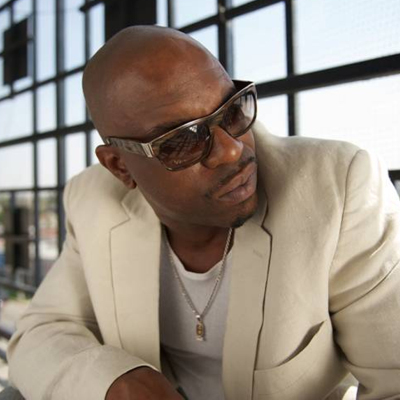
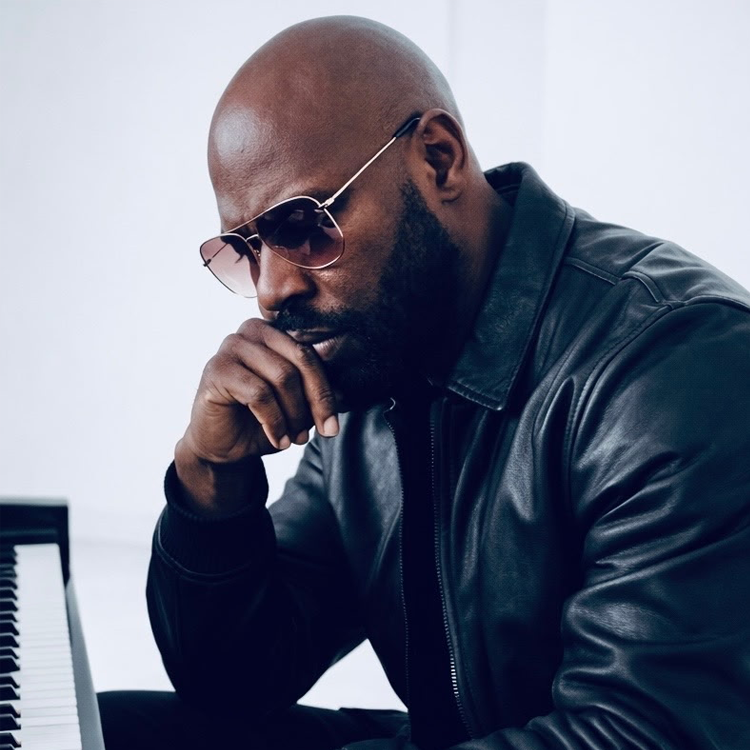
Before G-funk became a movement, before the West Coast sound became a global force, there were artists and producers experimenting with how hip-hop could feel. Gregory “Cold 187um” Hutchinson was one of those visionaries.
Coming out of Pomona, California, as the driving force behind Above the Law, Hutch helped introduce a different dimension to West Coast hip-hop—one where street stories met musicianship, where raw reality collided with melody, and where production became a form of storytelling. His records didn’t simply play; they painted pictures.
Raised with the influence of legendary soul composer Willie Hutch, music was never just about rhythm for Big Hutch. It was about composition, emotion, and creating something that could stand beyond a moment. That philosophy helped shape classics like Livin’ Like Hustlers and Black Mafia Life, projects that captured the streets while expanding the possibilities of what hip-hop could sound like.
But Hutch’s story has never been limited to one era or one sound. From Ruthless Records to Death Row, from Above the Law to his evolution as Big Hutch and the creation of G-Soul, his journey represents the constant push between honoring the past and creating the future.
Because the greatest innovators are rarely satisfied with what they already accomplished. They keep searching. They keep challenging themselves. They keep evolving.
Cold 187um’s legacy is not only that he helped shape a sound. It’s that he helped redefine what hip-hop could become.
G-funk has become one of hip-hop’s most recognizable sounds, but the story behind it is often simplified. When people talk about G-funk today, what part of the story do you feel is missing?
What gets overlooked is what G-funk actually is. A lot of people think the sound is just Parliament or Zapp & Roger, but it can really be anything that’s slowed down, smoothed out, and given that signature vibe while still keeping the hardcore lyrical element.
I could take a jazz record, slow it down, put a boom-crack rhythm under it, make it bop a little, and it would still fit what I was doing with my theory called G-funk. When you add those funky elements, it can come from anywhere. It could have a Zapp & Roger feel, a Michael McDonald feel, or even a classical influence.
As long as you’ve got the boom, the crack, the melody, the harmony, and the keys, that’s G-funk. I think that’s what people overlook when they analyze it. It’s really more of a vibe than a specific sound.
With Willie Hutch as part of your family legacy, music was already in your DNA. When did you realize you weren’t just following that tradition—you were expanding it?
Absolutely. Coming from the legacy of my uncle and my father, I always felt like I was extending that branch of the family legacy.
I wasn’t trying to imitate them. I wanted to emulate the greatness they had already established while creating something that was uniquely mine. I’m a musician, a composer, and an artist all rolled into one.
Being able to make my own mark became very important because I understood what legacy truly means. Once I started integrating a broader musical approach instead of just a straight hip-hop approach, I realized I was taking that legacy to another level. That became my contribution as a Hutch.
When Above the Law arrived with Livin’ Like Hustlers, you were representing a world many people had never heard described that way. What was happening in Pomona and around Ruthless Records that created that moment?
One thing I can say about Livin’ Like Hustlers is that it was completely different—both sonically and lyrically. At that time, Southern California was deep into gang culture, but it was also the crack era. Nobody had really made a record that documented that world the way we did.
Eazy-E, Dr. Dre, and Laylaw recognized that we were bringing something different to Ruthless. We weren’t trying to sound like N.W.A. We were talking about our real lives as drug dealers coming up between Pomona and South Central.
That honesty made the record powerful. People had heard street records before, but they hadn’t heard that level of detail about the hustle. It was very different from Straight Outta Compton and everything else coming out of Ruthless at the time. I think that’s why it hit the world the way it did.
Your production has always had a cinematic quality—almost like every record has a setting, a scene, and a story. Where did that approach come from?
I’ve always believed a producer has to be a visionary. If somebody came to me and said, “Make it sound like we’re rapping in an alley,” I could already see it sonically before I started creating it.
I always wanted to make music you could actually visualize. Beyond storytelling, I wanted listeners to feel like they were standing inside the music.
That’s why vibe is everything to me. I take a cinematic approach. If it’s fun, I want you to see the party. If it’s dark, I want you to feel that darkness. Whatever emotion I’m creating, I want you to experience it visually through sound.
You’ve experienced multiple eras of the music business—from Ruthless to Death Row to independence. What is the biggest lesson the industry still hasn’t learned about the value of artists and creativity?
The music business still refuses to learn that talent is the single most important part of everything. It respects talent when it needs it, but it doesn’t consistently respect the artist.
Without honoring the creative mind—that divine place where music comes from—the industry always falls short. You see it in how artists get paid, how they’re treated, and how quickly they’re discarded.
That’s always been one of the biggest flaws in the business model.
Every legendary career comes with victories and obstacles. Looking back, which moments shaped you more—the achievements or the challenges you had to overcome?
The setbacks taught me more. Losing teaches you how to win. Coming from the bottom, not knowing how far I could go, all those difficult moments gave me the fight that’s carried me through this business.
The victories definitely motivate you to keep climbing, but the setbacks made me a stronger producer, a stronger artist, and a stronger man. This industry is cutthroat. Sometimes you don’t know who your friends are and who your enemies are. Growing up in such a competitive era forced me to become stronger.
“Gangster & Elegant” feels like a reflection of growth, maturity, and evolution. How does that project represent the difference between the young artist who entered Ruthless and the artist you are today?
“Gangster & Elegant” represents evolution. It’s taking the hardcore mentality I’ve always had and combining it with something that’s coming from my soul.
You have to grow up. I don’t want to be the same person I was 25 or 35 years ago. This new sound I call G-Soul is about becoming better while still remaining true to who I am.
I’ve always been taught to take music further than where you found it, and that’s exactly what I’m trying to do.
Your newer music explores themes of purpose, discipline, and legacy. At this stage of your career, how important is it to create from a deeper place?
They’re completely intentional. At this point in my life, I want to create music with more substance—music that’s coming from my soul instead of just commenting on the world.
As a composer and writer, I want people to hear what my spirit is saying. That’s why G-Soul exists. I still want the music to knock. I still want people to have a good time. But I also want there to be depth, purpose, and a message behind everything.
West Coast hip-hop has sometimes been defined by controversy instead of creativity. Why do you think the musicianship and artistry behind the movement were overlooked?
Absolutely. When we first came out, the content was so raw that people focused on the shock value. But what gave our music staying power was the musical integrity behind it.
The headlines focused on the lyrics, but the reason the music lasted was because of the musicianship. That’s why the sound became the soundtrack of an entire culture.
I do think people misunderstood that because the content overshadowed the music.
Your generation had to create identity without the technology available today. What is something that can never be programmed, replicated, or downloaded?
You can’t download vibe. Our generation had to create our own identity. Technology can imitate what we did, but it can’t create the essence of who you are. That comes from a divine place.
Software can recreate sounds, but it can’t recreate soul. That’s something every artist has to discover for themselves.
History knows Cold 187um the producer, the artist, and the pioneer. What is something people still misunderstand about Gregory Hutchinson the person?
People probably don’t realize I’m actually a pretty laid-back guy. Back in the day, I was young, grimy, and aggressive, so people built that image of me.
But I’ve always been mellow and cool with the people I’m cool with. I think that’s probably what surprises people the most.
When future generations study the evolution of hip-hop, what do you hope the name Cold 187um represents—not only musically, but culturally?
I hope people say I always did it the right way. I hope they remember that I genuinely cared about the culture and about moving it forward.
When you innovate something, you want to be remembered on many levels. But more than anything, I want people to know that I served the game.
I left it all on the field. I put it all on tape.