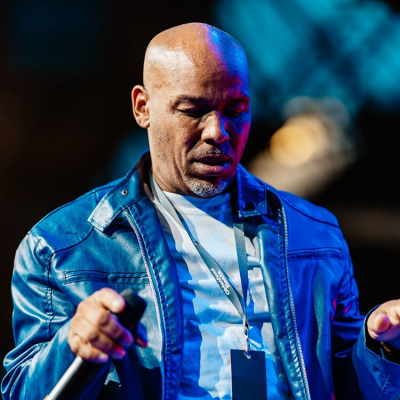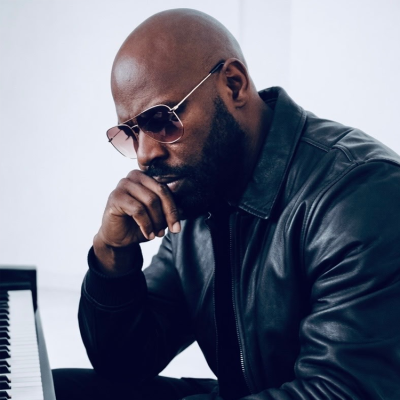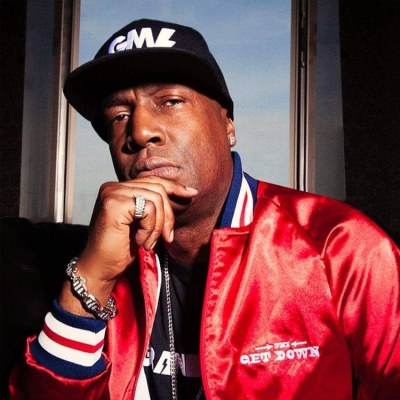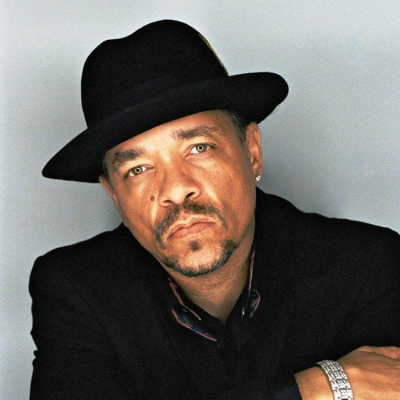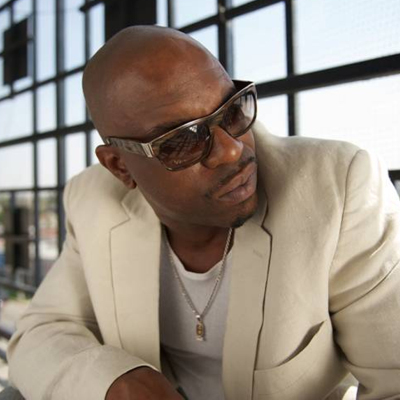








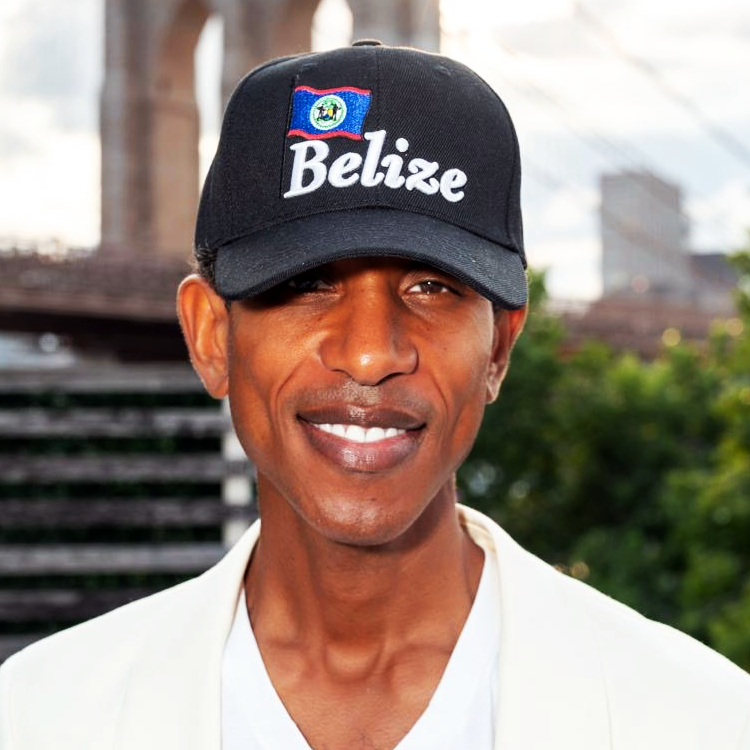

From Brooklyn and Diddy’s Bad Boy label to Belizean politics and back behind the mic, Shyne isn’t revisiting the past — he’s finally getting the chance to continue what life interrupted.
Shyne’s career spans two countries and numerous challenges. He was shaped by Brooklyn’s edge and Belize’s roots.
His early hip-hop career began with hits like “Bad Boyz,” but a prison sentence interrupted his momentum. After his release, he was deported to Belize, where he transformed from a rapper into a public servant, eventually becoming a legislator.
This journey inspired his upcoming project, “The Honorable Shyne.” In 2026, he returned to the stage at Kings Theatre to reconnect with his music, having previously missed the chance to perform it live. His new tour, 2622 LGND, features collaborations with artists like Barrington Levy.
Now, Shyne is not just revisiting old hits; he is also exploring new music with a fresh perspective. He is finally ready to share the full story of his artistic journey and what it means after all he has experienced.
Two places sit at the foundation of your story: Belize and Brooklyn. Long before either music or politics entered the picture, what did each of those worlds put into Moses Barrow that you still carry today?
I think having that duality of rich Caribbean heritage, rich Belizean heritage, and growing up in a poverty that is different from poverty here in the States shaped me.
Poverty here in the States is what we would call upper-lower class in Belize. Poverty in Belize is real poverty. It’s no electricity in the house poverty. Water coming through your roof poverty. There’s a place actually called London Bridge, or London Bridges, where you’d walk on crates over water to enter and exit your shack.
But even within that abject poverty, there was a wealth of resilience, a wealth of hope, a wealth of dignity, and a wealth of finding contentment within those dire circumstances.
I’m 50-50 on that in some regard because I always believe in wanting more and wanting better. Sometimes there can be a bit of complacency in Belizean culture, where some may accept things for what they are rather than saying, “You know what? I deserve better than this. I’m going to get better than this.”
But there is also a genius in still wanting more while appreciating what you have and finding a level of contentment.
I’m someone who is always grateful for what I have, but I do want more in certain regards. I do want to push. And for me, where I’m at in my life now, it’s not even about pushing for material things.
I’m pushing for something greater as far as the society I create for Belizeans, the opportunities I create for Belizeans, and growing the GDP in a way that benefits Belizeans. The way I think is not for myself. I don’t want a trillion dollars for myself. I would like to be able to help Belize grow to a trillion-dollar GDP. That’s different from me wanting more for me. I want more for us as a people.
Then growing up in the United States, growing up in Brooklyn, you learn that if you can do it in New York, you can do it anywhere. That’s what the song says, and that is the real-life situation. If you can make it here, you can make it absolutely anywhere.
This is the concrete jungle. This is brutality. This is war. And if you can make it from these battlefields, you leave a five-star general, highly decorated.
That tenacity, that drive, that focus, that manifestation, that knowing that there is no “no,” there is no failure—there’s a refusal to accept defeat. Basically, what we saw with the New York Knicks this season. That’s the spirit of New York.
So growing up, I took the Belizean resiliency—the Belizean ability to make a lot out of zero, out of minus zero—and married that with the opportunity and iron will you develop being here: the tenacity, the drive, the determination, the zeal.
The difference with Brooklyn was the opportunity. Once you push through and manifest whatever your destiny is, and marry that with sacrifice and hard work, you have that opportunity.
Unfortunately, too many Belizeans don’t have that opportunity, and that’s where I come in. My hope is that I’ll be able to give them that opportunity, along with other stakeholders who are of like mind.
That’s what made me. That’s what made me who I am—to still be where I am today, still relevant, and to have created a life for myself that is an inspiration to people all over the world.
I think we all have similar qualities. We all have resilience. We all have invincibility. We are all indefatigable. I don’t think there’s a human being who isn’t made with those genetic strands. It’s just a matter of finding it, digging deep within yourself, pulling it out, and never giving up, never giving in, never relinquishing whatever your pursuit is.
And I think we feed off each other.
Sometimes when you see someone accomplishing something, overcoming something, it makes you say, “You know what? Yeah, all right, I can do that.”
That’s why I did my documentary. That’s why I have these conversations—so someone can draw inspiration from me, as I do from so many incredible people.
September marks 26 years since Shyne arrived, yet those records still connect with listeners who weren’t even around when the album dropped. When you hear it today, what do you believe gave that record its staying power?
That’s 26 years of the Shyne album legacy—from September 26, 2000 to September 26, 2026, coming up in another 30-plus days.
I believe I have to give it to my hip-hop ancestors who raised me.
KRS-One, with “The Bridge Is Over,” which is one of the first rap-reggae, rap-dancehall collaborations. I would say one of the hardest. When “The Bridge Is Over” used to come on in any club, any place, the entire place would shut down. There was nothing like it.
As a Caribbean kid, hearing KRS chatting patois and singing was incredible.
Another one of my heroes is Grand Puba. He was part of Masters of Ceremony, and they also did some patois, some chatting. Dancehall reggae has always been an intricate part of hip-hop. Kool Herc came to the Bronx from Jamaica with a sound system, and that’s part of where it started, along with the other founders.
But yeah, I’ve got to give it to my ancestors.
Nas—It Was Written was my favorite. Illmatic as well. Only Built 4 Cuban Linx… I’ve got to give it to Wu-Tang, 36 Chambers. Method Man. Method Man has that raspy voice. They call him the Iron Lung. There are similarities there as far as that heavy voice. When I heard him, I would hear myself.
Ghostface. Raekwon. RZA, one of the greatest producers. He’s on my new album, The Honorable. He’s on the Rap Prime Minister album, and he’s on the Actual Intelligence album. So he’s on my three new albums coming out this year, next year, and in 2028.
The Notorious B.I.G., of course. Ready to Die, Life After Death. Jay-Z: Reasonable Doubt, Vol. 1, Vol. 2, Vol. 3, The Blueprint, The Blueprint 2, Magna Carta… Holy Grail, Watch the Throne, The Black Album, The Dynasty—we can’t forget The Dynasty.
Dr. Dre: The Chronic, 2001. Snoop Dogg, Doggystyle. Tupac Amaru Shakur, All Eyez on Me, Me Against the World. N.W.A. Rakim. Big Daddy Kane. Public Enemy. LL Cool J.
Those are some of the people I owe.
I took all my inspiration from them as far as the way they told stories, the beat selection, and the incredible production from some of my favorite producers of all time—Timbaland, Swizz Beatz. DMX, I can’t forget DMX. Definitely cannot forget DMX.
It’s amazing that all of my favorite producers are on the new album: Dr. Dre, Swizz Beatz, Timbaland, RZA, Hit-Boy, Boi-1da, Polow da Don, Heatmakerz—New York’s very own.
I definitely attribute it to being a student of some of the greatest rappers and musicians of all time, taking everything I learned from them, everything I loved about them, and saying it within my own voice, from my lens, from my perspective.
I wanted to create music that made me feel the way Only Built 4 Cuban Linx… made me feel, the way Illmatic made me feel, the way It Was Written made me feel, the way Life After Death made me feel, the way No Way Out made me feel, the way The Chronic made me feel.
When I made music, I didn’t want to replicate what they made, other than the feeling—the feeling of something great. A great beat marrying an incredible flow, the melodies, the way you can dance on it, and then the metaphors, double and triple entendres, analogies, wordplay, and just painting a portrait.
Doing that in a way that made me feel like the records I loved made me feel.
And it shows in the Shyne album. It shows in the Godfather Buried Alive album. I was always speaking from the gut, from the core of my soul.
I think that’s also what has stood the test of time because feelings never change. You can listen to a song and remember where you were, the day, the time. You can smell the air.
When I walk these streets of Brooklyn and Manhattan, I remember 1998, 1997, 1996, 1995, ’94, ’93, ’92. I remember it like it was yesterday.
Music does that. Music captures time.
And some music is timeless because the feelings carry. There will always be rage. There will always be bop. There will always be cool. There will always be that will to survive. There will always be victory, triumph, tragedy.
What I was facing, there are young people facing that now. There are people from my era who are still facing life. I think that’s what allows an album to stand the test of time.
And I had some great producers on there. You can never forget the producers. The Hitmen. Pharrell was on there.
There were some great producers on both albums. I had Just Blaze on the second album. I had Kanye West on the second album. I had Bob Marley on the second album.
That’s actually the name of the tour: 2622 LGND. It’s after the anniversaries of both albums because they’re both classic albums, in my humble opinion.
Barrington Levy wasn’t simply a feature on your records—his voice helped connect your Caribbean roots to the Brooklyn MC you became. What was already there culturally between the two of you that made “Bad Boyz” and “Bonnie & Shyne” feel so natural?
The chemistry between Barrington Levy and me comes from the fact that he was a hero of mine. He’s a hero of most Caribbean kids.
“Here I Come,” “Under Mi Sensi,” “Murderer”—Barrington has the hits. His arsenal is second to none, and he’s been doing it since the ’70s.
He’s a Caribbean youth hero—from Belize to Haiti to Jamaica to Trinidad to wherever. We grew up on Barrington Levy. Obviously, me being a Caribbean youth, a Belizean youth growing up in Brooklyn, that’s our sound.
Initially, I wanted to be a chatter. I wanted to be like Shabba. I wanted to be like Super Cat. I wanted to be a dancehall artist. Then I got into rap. The “Bad Boyz” record came from the Grace Jones sample that EZ Elpee used, and Grace Jones is from Jamaica. So it was just magic. Absolute magic.
That record has stood the test of time, along with “Bonnie & Shyne.” When I performed at Kings Theatre in Brooklyn for the 25th anniversary celebration of the Shyne album, when those records came on, the people went berserk. They sang every line of my part as well as Barrington’s.
That really made me say, “I’ve got to get Barrington on stage.” People loved what we created. They were happy to see me, but I think they’ll be even happier to relive the moment in its totality.
It’s kind of like Mary J. Blige not being on stage at Yankee Stadium. Teyana did her thing, and obviously there’s no one like Beyoncé, but Mary is Mary. Mary created that record with Hov. If she could’ve been there, people would have loved to see that.
The difference is Hov and Mary have performed that record together. Barrington and I have never performed our record together in the United States. We performed it once in Jamaica, maybe around 2015 or 2016, but we’ve never performed it for our American audience or any audience outside of Jamaica.
So now is the time.
We’re celebrating the legacy of the Shyne album, celebrating the legacy of Godfather Buried Alive, and celebrating my 26 years in the music industry.
I’m putting out a new album at the end of the year, The Honorable. I’m putting out Rap Prime Minister next year, Actual Intelligence in 2028, AM PM 1236 in 2029, and then finishing off, going into the sunset of the House of Representatives—hopefully as the next prime minister of Belize—with the Belizean Breeze album in 2030.
Success came early, but some of your most defining lessons arrived after everything changed. Looking across incarceration, deportation, public service and this return to music, where did your definition of being “wealthy” change most?
Each chapter taught me so much. I don’t have one particular chapter, but if I had to choose, this is a pretty fantastic chapter. I’ve never been wealthier.
And when I say wealth, I’m not talking about J.P. Morgan. I’m not talking about the Federal Reserve. I’m talking about the attributes, the knowledge, the information that money just can’t purchase—the integrity, the honor that you can’t buy.
On my new album, I say I’d be a trillionaire if integrity were measured. That’s a great place to be. I don’t look at life from a materialistic standpoint because what I want is so much more than that.
When you’re trying to build a society, when you’re trying to develop a nation, when you’re trying to put everyone in your country at the level they deserve to be, then that’s something so much more than any material gain.
I could not have gotten here without going through everything I’ve gone through and seeing the truth of everything. Going to hell allows you to see the truth of the devil, and it allows you to appreciate what heaven really is.
Heaven is right here—being the best version of yourself and then trying to help other people become the best versions of themselves.
I’ve never been more satisfied. I’m okay that I didn’t return to Yankee Stadium because that’s not the life that I had. My career was taken away from me, but that inspires me.
I find satisfaction in knowing that if I wasn’t wrongfully incarcerated, if I wasn’t held in captivity for 10 years and then deported for 13 years—that’s 23 years of my life taken away from me—yeah, I’d be performing at Yankee Stadium. I’d be performing at stadiums.
But I’m okay that that is not the case. I have no problem working and enjoying the audiences that I do have and connecting with the people who support me.
I love performing. Whether it’s Webster Hall, Kings Theatre, Lowe’s, or Yankee Stadium, I just love the people who love me. I appreciate being on stage and sharing my story.
But I have true satisfaction in that I am content with the hand God has dealt me. I try to reshuffle the deck sometimes. I try to edit the script and rewrite it. But I’m okay, and I find great pleasure in making the best of the lemons, limes, and lemonade I’ve gotten.
Kings Theatre wasn’t simply your return to a Brooklyn stage—you were performing much of Shyne live for the first time, more than two decades after recording it. What did it take emotionally and physically to become that MC again without pretending you were still that young man?
That was surreal. You can have all the material things, but those moments you can’t buy.
The glory of being a hometown hero. The glory of people respecting you for who you are as a human being. That is immeasurable. It’s invaluable.
After being in a position where I didn’t know if I would ever be able to return to Brooklyn or the United States, then having returned as a diplomat, I still wasn’t really able to perform. I wasn’t able to work in that capacity.
After I no longer held a seat in the House of Representatives, I wasn’t sure if I would be allowed to come and work in the United States because of my wrongful incarceration.
So to be able to return to the stage, sell out Kings Theatre, and have all those people standing-room-only, singing every song—from the moment I walked out and said, “Dear America,” and the whole theater erupted—man, I’ve never felt so good.
The only thing that compares is holding my daughter in my arms during her first minutes and seconds on this earth.
The preparation for that was unlike anything I had ever experienced because I had never performed the Shyne album. I had never performed most of those songs, with the exception of “That’s Gangsta,” “Bonnie & Shyne,” and “Bad Boyz.”
So it was my first time performing the entire album. And I perform with a live mic. I don’t perform over vocals. Those are my vocals that you’re going to hear. If I miss a line, I’m cooked. I’m going to be smoked if I miss a line and forget anything.
That’s why the Brooklyn Bridge means so much to me, and why I do my interviews and photo shoots here.
When I graduated from high school, I used to ride to and fro across the Brooklyn Bridge delivering messages while attending Brooklyn Tech. I used to come up with all my rhymes when I would ride down the Brooklyn Bridge.
It meant so much to be able to return to the place that made me and recite, reflect, and recollect the story of Shyne live on that stage.
For 30 days, I would walk across the Brooklyn Bridge. I had a meeting in Manhattan today, so I walked over the Brooklyn Bridge because it reminds me of where it all started.
For those 30 days, I’d walk to and fro rehearsing. Then I’d rehearse in the studio. Then I’d listen to the Shyne album until I got to a point where I had it memorized. All I would do was rehearse the album all day, every day.
When I performed at the Lifetime Achievement Award show for BET, I thought that was difficult, and that was only a verse. I rewrote the verse, and it was my first time performing in heaven knows how many years.
So imagine performing an entire album live on stage. It was mortifying, but I’ve been through so much. It was like, “I’ve been through hell. There’s nothing I can’t do.”
And that’s that Brooklyn. That’s that Brooklyn-Belize in you. It doesn’t matter what it is—we’re going to do it. We don’t know how to do it, but we’re going to do it. We’ll figure out that we don’t know how to do it after we start doing it, and then we’re going to figure out how to do it while we’re doing it, because failing is not an option.
I knew I was going to return to the stage, and I knew I was going to figure it out. I put in the hard work, and it was worth it.
Thank God I didn’t forget any of my lyrics. And I was able to not just be on stage remembering lyrics, but I was able to give them their Shyne. They were worried that they would get Barack Obama instead of Shyne Po.
So I gave them the Shyne that they knew and loved. I’ve never experienced anything like it.
Hip-hop gave you a platform to speak from your own experience; elected office required you to speak for other people. What did representing Belizeans teach you about the difference—or similarity—between those two responsibilities?
When you asked earlier about the different chapters of my life and what they taught me, I said that this chapter is probably the best chapter thus far. I’m sure it’ll get better, but part of that is being in the House of Representatives.
Music and political service are one and the same, in my humble opinion. As a musician, you are the voice of people. Whether you’re singing love songs, whether you’re spitting 16s—you’re speaking to people.
Nobody raps just to hear themselves. I don’t rap just to listen to my voice. I rap because I’m singing songs that belong to the world. I’m singing about my experience, but my experience is not really mine. There are so many people going through similar experiences. That’s how I approach music.
As an elected representative, as a political servant, you’re going to the people’s house to literally be their voice.
I spent a lot of time in my constituency. As the opposition leader of the House, I would go around to the 31 constituencies, talk to the people, and understand their needs, their wants, their vision for themselves, and the society they want to live in.
Then I would go to the House and advocate on their behalf. There’s nothing I’ve ever done that was more important because, obviously, those are my countrywomen and men.
But then, as a musician who sold over 40 million records and spoke to the world, that’s also very impactful—sharing my story with the world and being a voice to other people all across the globe who can listen to the Shyne album and Godfather Buried Alive, draw inspiration, draw parallels to their own lives, and use my music as a way to push through.
So it’s tough. It’s really tough.
I sound like Michael Manley, who was prime minister of Jamaica, and Bob Marley. I can’t choose one. I love them both. But definitely serving the people of Belize—there’s nothing like serving the people of Belize, which I still do today.
Everything I do, whether it’s Park Fest, helping those organizers—some young people along with some seniors—and just whatever I can do to help Belize. Every interview I do, it’s always about Belize.
The Honorable Shyne allowed somebody else to frame your life through a documentary lens—including moments you admittedly might have removed yourself. What did surrendering that editorial control teach you about the difference between telling your story and allowing your story to be observed?
No. No, no, no. Even making music, I always loved making music, so it wasn’t necessarily a challenge.
Sure, when you’re in the studio with Dr. Dre, he might tell you to do a line over. I might say, “Okay, maybe I like to do it the other way,” but if Dr. Dre says do it the other way, I’ll do it his way.
And thank goodness I’m usually able to get it the first time he says to change something. I love what I do, and I have a gift. I think about my gift day and night. And, as I said, I still want to create the best music.
Some of the great contemporary albums—whether it’s GNX, Iceman, Let God Sort Em Out, The Fall-Off, Roc Marciano and Stove God—I like the way those albums feel. A lot of the Nas records he did with Hit-Boy, those albums.
For me, I draw inspiration from greatness. Then I want to give you my version of greatness and go somewhere they haven’t gone, or try to be in that stratosphere with my own thing going on.
That’s what I love about this planet. Everyone can be great in their own unique way. But as far as the Hulu documentary, it was seamless. It was effortless.
I can’t really take credit for it because it was Marcus Clarke and the production team. Jason Aidoo. I wasn’t really involved in the creative part.
I just made myself available, as I’m doing now. I answered the questions. I made family and friends available. Then they put it together.
By the time I saw the documentary, it was too late to change some of the things I might have changed if it were left to me. But I ended up being convinced that it was for the best because a documentary is supposed to give the ugliness, give the beauty, give the candid moments.
It wasn’t supposed to be from my perspective. That’s what the album is about. The albums are from my perspective. That’s how Shyne feels. My memoir is from my perspective.
The TV series—I’m going to be much more involved in that, so it’ll be from my perspective.
A documentary is usually someone sitting there and painting you. Unless someone is malicious and paints you totally differently from what you look like, or tries to distort your features, then you have something to worry about.
But I was very confident from the moment I decided to do business with Disney, Hulu, Jason Aidoo, and we picked Marcus Clarke to direct. I was confident that I could just say what I had to say, step away, and the finished product would be what it was.
People loved it. People loved all aspects of it—even the aspects that, to me, are cringe-worthy, where I’m like, “Ugh, I said that? I did that? Oh my goodness, take that out.” They’re like, “No, but that’s what a documentary is supposed to be.”
Kings Theatre gave audiences a taste of what happens when different pieces of your history occupy the same stage. With Barrington Levy and Lil’ Cease joining 2622 LGND, what kind of night are you trying to create beyond simply revisiting the records?
For me, I just wanted to create an unforgettable, magical experience. Kings Theatre was so magical.
Respect to Dipset, Juelz Santana, AZ, Foxy Brown, Lil’ Cease—everybody who came out. When Lil’ Cease came out, the crowd went wild. The hit records that he’s been a part of are unforgettable moments in hip-hop.
To be able to bring him out adds some color to my show. And then Barrington Levy—obviously, that is what started my career. The U.S. audience never got a chance to experience that magic.
If you would have seen how they were singing his part of the song at Kings Theatre, I was like, “Man, imagine if he was on stage.” So, as I said, this is going to be a celebration of the golden eras of hip-hop and reggae on one stage.
The “Bad Boyz,” the “Bonnie & Shyne,” the Shyne album in totality—it’s just going to be great.
Godfather Buried Alive in totality. We’re going to take the best of Godfather Buried Alive—the Kanyes, the Just Blazes, the Bob Marleys—and merge that with Shyne. Then we’re going to merge that with Barrington Levy.
We’re going to bring out special guests all over the country wherever we go. We have a lot of friends. It’s going to be a magical experience in every state we go to.
Every generation eventually becomes somebody else’s foundation. Now that artists who grew up hearing Shyne are shaping today’s music, what matters most to you about remaining part of hip-hop’s present without competing with its younger generation?
I’m not sure if it moves at a different pace as much as there are different people moving at their pace.
There are different movers of the space at their pace. That’s just the way it is. Michael Jordan can’t dominate forever, but Kobe, LeBron, Steph, any of the new GOATs, any of the new greats—they’ll always look to Jordan.
I appreciate being part of a golden era. I appreciate that we laid the foundation for this new era. For me, it’s just about making great music.
What they love about Shyne, what they love about what I brought to the table—the new guys were very much inspired by what I did.
Some of the artists whose albums I mentioned, those guys love Shyne. If you listen to Drake, he said, “Ashes to ashes, dust to dust” on the Iceman album. He got that from the “Bad Boyz” record.
So I’ve influenced a lot of your favorite rappers, respectfully, just as my favorite rappers influenced me. For me, integrity is important. Artistry is important. And it’s just about making great music.
The producers are where it starts. Once you get the great beats, then you just have to know how to do what you know how to do.
Obviously, I might not be able to take off from the line the same way—but I can still put numbers on the board.
Athleticism definitely can wear you down at a certain age, but music is a little different. I think there’s a longer durability there.
It’s all about pushing the boundaries and testing that. I definitely believe everyone has a time, but when that time is, the people will tell you. The unique thing about me is that I never got my time.
I put out two classic albums, and then I was wrongfully incarcerated. I lost my voice. I was deported. I would never make music right now if I didn’t feel like I had some of the best music to put out—music that can go bar for bar, beat for beat, toe to toe with anything that’s out.
I just wouldn’t do it. I don’t want to be a shadow of myself. And, like I said, I’ve got the GOATs with me. I’ve got the air. I’ve got the voice. So I feel great about the music you’re about to hear.
Most veteran artists have decades of uninterrupted recording between their debut and where they stand today. You didn’t. Does returning to the studio after everything that happened make this feel less like another Shyne album and more like the debut you never got to finish?
I feel like these albums I’m writing now are my debut. Remember, the Shyne album took 18, 19, 20 years for me to write because it was my life up until that age.
So it’s been 23 years since I was able to return to the booth in full form. That’s how I’m treating it. I feel like a new artist.
I’m so excited. I feel like I can walk from here to California. I feel like I could walk through a wall. I feel like a superhero. All I do is listen to my albums.
And because it’s five albums, as I’m finishing one album, I get to doing the other one. I’m so excited. I can’t wait to record the next album. So it is my debut all over again.
And that’s a good place to be because some artists go through writer’s block. Some artists lose the fire. They lose the inspiration. It’s good to still feel that excitement, to still feel that hunger, and to still have that gift to share with the world.
So I feel like these albums are my debut albums. And in some ways, it is your debut because you’re always coming back. Obviously, the conversations change because I’ve grown. I’ve evolved.
But the tenacity, the determination—it’s exciting for me. I love it. And it takes me back. The more you grow, the more you return to the essence because hip-hop was never about being one thing and that’s the only thing. Hip-hop was always diverse.
There was De La Soul and Kool G Rap at the same time. There was Rakim, then there was Public Enemy. There was LL Cool J and there was Ice Cube. There was A Tribe Called Quest and there was N.W.A. Hip-hop was never about everyone sounding the same, being the same, or rapping about the same content.
So I love being able to push the boundaries of what hip-hop should be and what hip-hop should look like. There is no such thing. Hip-hop is hip-hop.
There’s a certain essence of it. Yeah, we tell the truth of life, but our truths have evolved over 53 years. So hip-hop at 53, to me, looks like me.
We’ve got our sons, but I think it’s an exciting conversation to have—the 53-year-old hip-hop conversation.
The person walking onto the 2622 LGND stage carries the MC, prisoner, father, public servant, parliamentarian and political leader with him. Rather than separating those identities, how much of this moment is about celebrating the fact that you survived long enough to become all of them?
The culmination of all the different offices and roles that I’ve played is what makes this such a celebration. As human beings, I believe where we are today is never where we’re going to be tomorrow.
We keep moving. We’re in motion. We’re going to go from this location—you’re going to your next location, I’m going to my next location.
The clock keeps ticking, our hearts keep beating, our pulse keeps going, inshallah, by God’s grace. So to be able to celebrate 26 years of constant motion, constant progression, constant evolution—that means something.
Most people don’t make it 26 years. Some people are not here. A lot of our colleagues in the music industry aren’t here. A lot of colleagues in politics aren’t here. A lot of colleagues from the streets aren’t here. So I’m grateful to be here.
And then to be here in real form, to be here with all of my faculties, to be here operating on that superhuman level after all that I’ve been through—that’s a celebration. I think that’s what this tour is all about. Coming together and not just celebrating me, but celebrating us, because all of us have what I have. I’m just the poster child of it.
So yes, I’m excited to celebrate with the people who believed in me, with the people who identified with me, with the people who never gave up on me. It’s really a celebration for us. If you want to join the celebration, I welcome you.
We’re going to be in about 26 cities across the United States—all of Texas, San Francisco, L.A., Atlanta, Chicago, D.C., Boston, Jersey. We’re going to be all over. I look forward to seeing you and celebrating with you.
Plaques, political titles and history books will document what Moses Barrow accomplished. When all of those titles eventually disappear and only the measure of the man remains, what do you want that measure to be?
When people tell my story, I pray that the legacy is that I was a great servant to the people of Belize, a great servant to humanity, and a great father to my daughter. That’s my legacy.