







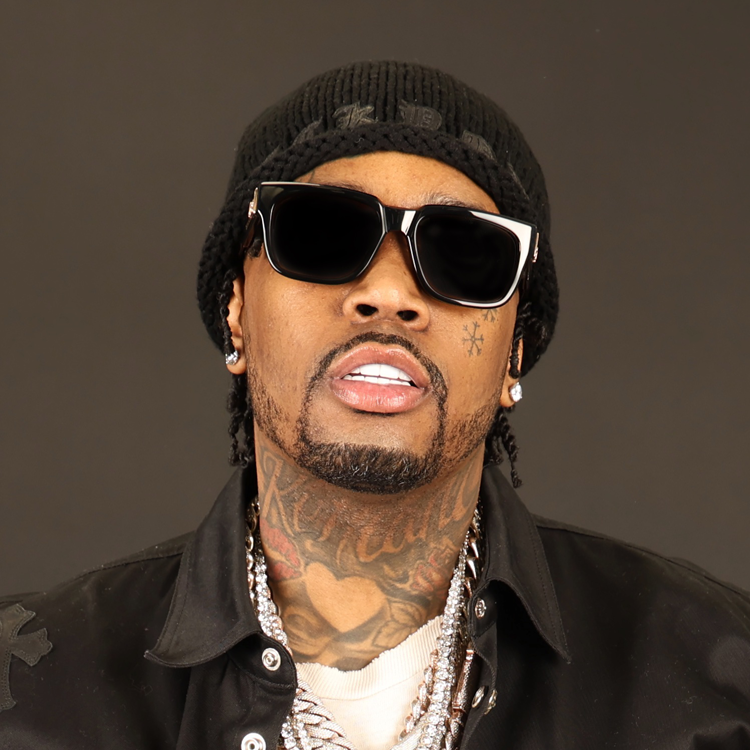

Before the gospel choirs, the prayers, the Bible verses and the talk of purpose, there was Brooklyn. There was East Flatbush. There was Maxie Lee Ryles III — a kid growing up in a borough that has given hip-hop some of its most distinctive voices, characters and stories.
Long before the world knew Fivio Foreign, Maxie was absorbing his surroundings, learning how to navigate Brooklyn and turning those experiences into the voice that would eventually carry him around the world.
When Fivio arrived, he didn’t exactly ease into the conversation — he kicked the door in. Emerging from Brooklyn’s drill explosion, his unmistakable ad-libs, animated delivery and larger-than-life presence quickly separated him from the pack.
Then came “Big Drip.” The 2019 breakout became one of the defining anthems of a movement reshaping the sound and energy of New York hip-hop. Fivio wasn’t watching Brooklyn drill happen. He was helping drive it.
The records got bigger. The stages got bigger. The collaborations got bigger. From Pop Smoke and Lil Tjay to Drake and Kanye West, Fivio’s voice traveled far beyond Brooklyn.
His scene-stealing performance on “Off the Grid” introduced him to an even wider audience, while “B.I.B.L.E.”, his 2022 debut album executive produced by Kanye West, revealed there was more beneath the drill persona. Even the title — Basic Instructions Before Leaving Earth — hinted at a deeper conversation about life, loss, faith and purpose.
Now, years removed from the first “Big Drip” wave, that side of Fivio isn’t hiding anymore. He’s entering a new chapter shaped by faith, reflection, family, loss, accountability and purpose. “Chasin’,” featuring The Fire Choir, brings that evolution to the forefront, pairing vulnerability and spirituality with a voice that remains unmistakably Fivio.
Performing the record in the middle of Times Square made the message even bigger: a Brooklyn drill veteran taking a faith-centered message to one of the world’s most recognizable stages. And that’s what makes this chapter matter.
Fivio isn’t a newcomer manufacturing a redemption story. He’s an artist who lived the journey — represented his borough, earned his stripes, stood on some of hip-hop’s biggest stages and experienced the highs and losses that come with the territory. Now he’s looking at that same life through a different lens.
He isn’t erasing the Brooklyn drill pioneer who helped put his city on a new musical frequency. He’s carrying that history forward without allowing it to become his ceiling. The aggression, ambition, pain, survival instinct and faith were all part of the journey. Now he’s bringing those pieces together and asking a bigger question:
What do you do with everything you’ve been through once you finally understand what it’s supposed to mean?
From East Flatbush to the world stage, from “Big Drip” to “B.I.B.L.E.”, from drill’s front lines to a faith-centered future, Fivio Foreign’s story is no longer just about how far he came.
It’s about where he’s going — and who he’s becoming along the way.
Before the platinum records, the Brooklyn drill movement, sold-out stages, and global recognition, there was Maxie Ryles III growing up in East Flatbush. Who was that young man before the world knew him as Fivio Foreign, and what experiences shaped the voice we hear today?
I was really the same person, just without all the attention. I always had a good heart. I wasn’t always the best kid, but I was raised right. Brooklyn teaches you how to be tough, how to read people, how to survive, and how to stand on what you believe in. My mother played a big part in who I am, too. She always wanted better for me, even when I wasn’t necessarily seeing it for myself yet.
Everything I experienced — the good, the bad, losing people, being outside, trying to figure life out—that became part of my voice. So when people hear Fivio, they’re hearing Brooklyn, but they’re also hearing everything Maxie had to go through to become Fivio.
“Big Drip” changed your life almost overnight and helped redefine Brooklyn drill for a new generation. Looking back, did you realize you were helping launch a movement, or were you simply trying to make the hardest record possible?
Nah, I ain’t know. That’s the crazy part. When I first made “Big Drip,” I didn’t even think that was automatically the one. I had other songs I thought was crazier. We was just in the studio having fun, making music, being ourselves. Everything about it was organic.
Then it started going crazy in the streets, the clubs, everybody saying the ad-libs and doing the dances, and that’s when I started understanding what was happening. We wasn’t sitting there saying, “We about to change New York music.” We was just making what sounded like us.
Looking back now, I definitely understand the importance of that record. It helped put a bigger light on Brooklyn drill and opened doors for the sound to go places people probably didn’t expect it to go.
Brooklyn has always produced artists who represent their neighborhoods with pride — from Big Daddy Kane and Jay-Z to Pop Smoke and beyond. What does it mean to carry that legacy while still creating a lane that’s uniquely your own?
Brooklyn got a crazy history in hip-hop, so you gotta respect that. Everybody you named represented New York in their own way and for their own generation. I never wanted to copy what nobody else did. I wanted people to hear me and know exactly where I’m from.
With me and Pop and that whole era of Brooklyn drill, we brought another sound and another energy to the city. That’s something I’m always going to be proud of. Pop was my brother, so that part of the story is always going to mean something to me, too.
But I don’t want to just be remembered as somebody who represented one moment. I want to keep expanding what people think a Brooklyn artist—or even a drill artist—can do. I want my lane to keep getting wider.
“B.I.B.L.E.” showed listeners there was much more to Fivio Foreign than drill records. Looking back now, how important was that album in allowing fans to see the man behind the persona?
“B.I.B.L.E.” was very important because that was me starting to give people more of the full picture. I always looked at that album like different stories and different pieces of my life. That’s why the title meant something to me: Basic Instructions Before Leaving Earth. You can hear experiences, memories, lessons, pain, motivation, all of that.
Before that, a lot of people knew Fivio from “Big Drip,” the ad-libs, the drill records, and the energy. With “B.I.B.L.E.”, I wanted people to understand I could really rap, I could make different types of records, and I had more to talk about.
That album helped me break out of the box a little bit. And I think what I’m doing now is taking that even further.
“Chasin’” feels like one of the most vulnerable records you’ve ever released. At what point did you realize your story about your mother wasn’t something to keep private anymore, but something that could help other people heal?
Losing my mother is something that’s always stayed with me. That’s one of those pains that don’t really disappear. You just learn how to live with it differently.
For a long time, I couldn’t talk about certain things in the music and leave the deepest stuff to myself. But I’m at a different place in my life now. If I’m going to talk about growth and becoming a better man, I gotta be willing to talk about some of the things that made me grow.
“Chasin’” gave me that space. It wasn’t about making people feel sorry for me. It was about honoring my mother, thinking about the things she taught me, and being honest about where I am today.
And then I realized somebody else might hear my story and think about their mother, somebody they lost, or something they’re trying to heal from. That’s bigger than just me.
The song speaks about accountability, faith, and making better choices without feeling preachy. How did you find the balance between sharing your testimony and still sounding like yourself?
Because it is myself. That’s really the balance. I never wanted to get on a record and act like I’m perfect or like I got every answer. I don’t. I’m still learning. I’m still growing. I pray, I believe in God, I read the Bible, and I’m trying to make better decisions. But I’m still Fivio.
So I’m not trying to preach at nobody. I’m telling you what I’m going through and what is helping me. That’s a testimony to me. It’s like, “This is where I was, this is what I learned, and this is where I’m trying to go.”
The beats can change, the choir can be there, the message can get deeper, but my voice still gotta be my voice. That’s important to me. I don’t have to become somebody else to talk about God.
Hip-hop has always been at its strongest when artists tell the truth — even when it’s uncomfortable. Was recording “Chasin’” emotionally different from making your usual records, and did you learn anything about yourself in the process?
Definitely. With certain records, you can lean on the energy. You can turn up, give people bars, make something for the club, and keep moving. A record like “Chasin’” makes you sit with yourself.
When you’re talking about your mother, your mistakes, your faith, the things you’ve been chasing, and what really matters to you, you can’t fake that feeling. You gotta be honest.
It made me realize I’m comfortable showing more sides of myself now. Before, I probably felt like being strong meant not showing certain emotions. Now I look at it different. Being able to talk about what happened to you, learn from it, and still keep moving, that’s strength, too.
And musically, it showed me I don’t have to stay in one space. I can still sound like Fivio and give people something completely different.
You’ve collaborated with everyone from Kanye West and Alicia Keys to Queen Naija, Lil Tjay, Quavo, and DJ Khaled. What have those experiences taught you about growth, and where do you feel you’ve grown the most as an artist?
Being around great artists makes you pay attention. Everybody got a different process. You learn that it’s not only about getting in the booth and being talented. It’s about the details — how you structure a record, how long you spend on something, knowing when a song needs more, and knowing when to leave it alone.
Working with Ye definitely pushed me to approach records differently and really focus on the bars and the structure. Then you work with other artists, and everybody brings something different.
I think my biggest growth is understanding how to adapt without losing myself. I can get on a record with anybody and still sound like Fivio. That’s important.
Now I’m also thinking beyond just making a hot verse. I’m thinking about the whole record, the message, the performance, the visuals, and what people are going to take away from it.
Drill music is often associated with intensity and survival. “Chasin’” reveals another side of your artistry rooted in reflection and purpose. Do you see this as the beginning of a new chapter or simply another layer of who Fivio Foreign has always been?
It’s both. It’s definitely a new chapter because I’m in a different place mentally and I’m being more intentional about what I’m putting into the music. But this side of me didn’t just appear.
The faith was there. The prayer was there. The questions about life and God were there. Even back when I did that Funk Flex freestyle and Ye heard me asking about heaven, that was already part of how I thought.
People just knew one side of me more because that was the music that got the biggest attention.
Now I’m comfortable showing the whole person. I’m not abandoning drill. That’s part of me and part of my story. I’m just not letting one sound define everything I’m allowed to say.
The new Fivio ain’t really a different Fivio. It’s a more complete Fivio.
You’ve performed on some of the biggest stages in the world, from Rolling Loud and Summer Jam to international tours across Europe and Africa. Has seeing how your music connects with people around the globe changed your perspective on the responsibility that comes with your platform?
For sure. It’s different when you leave New York and you’re somewhere thousands of miles away and people know every word. You start realizing this music travels way further than your block.
When you’re coming up, you’re thinking about your city. You’re thinking about making the people around you proud and becoming successful. Then you start seeing kids in different countries listening to you and watching how you move, and it puts things in perspective.
I understand more now that what I say and what I put out can affect people. I’m not saying I’m going to be perfect because that’s not real. But I can be more conscious.
If somebody can look at my journey and see that you can come from where I come from, make mistakes, lose people, grow, change, and still keep going, then I want my platform to show that, too.
So much of today’s music moves fast, but songs rooted in real life tend to endure. Years from now, what do you hope listeners hear in “Chasin’” that goes beyond the beat and the bars?
I want them to hear the message. We spend so much time chasing things—money, attention, status, people, whatever—and sometimes you gotta ask yourself what you’re chasing and why you’re chasing it. That’s really where I’m at.
Years from now, I want somebody to play “Chasin’” when they’re going through something and hear that it’s never too late to stop, think, pray, and get yourself back aligned with what really matters.
I want them to hear my mother in it. I want them to hear growth in it. I want them to hear somebody who has been through a lot but is still here trying to understand his purpose.
If the record can make somebody think about their own life after the song goes off, then it did what it was supposed to do.
When the full story of Fivio Foreign is written — from Brooklyn drill pioneer to an artist unafraid to speak about faith, family, loss, and redemption — what do you hope your legacy says about the man behind the music?
I want it to say I evolved. I don’t want my whole story to be one song, one sound, or one period of my life. I want people to be able to look at everything and say, “He went through it, he learned, he changed, and he kept going.”
Of course I want them to remember what I did for Brooklyn drill. That’s history. I want them to remember the records, the performances, and the moments. But I also want them to know there was a real person behind all of that.
A father. A son who loved his mother. Somebody who lost people. Somebody who made mistakes. Somebody who believes in God. Somebody who kept trying to get better.
At the end of the day, the biggest legacy ain’t just that Fivio was successful. I want it to be that Fivio grew and wasn’t afraid to let people see the growth.