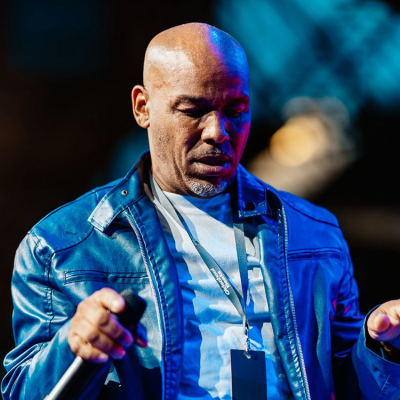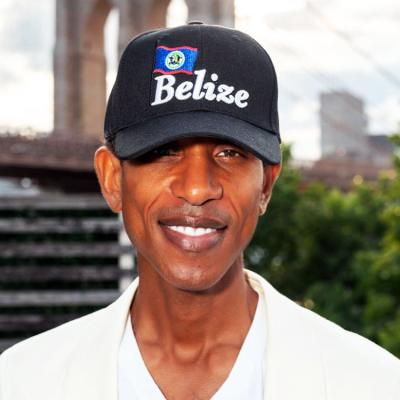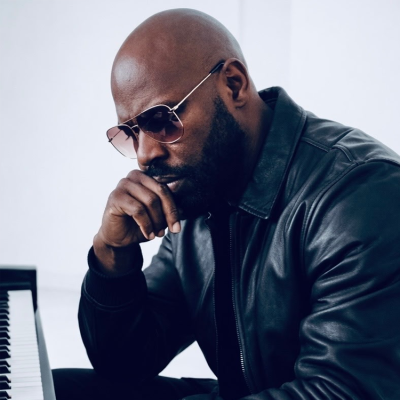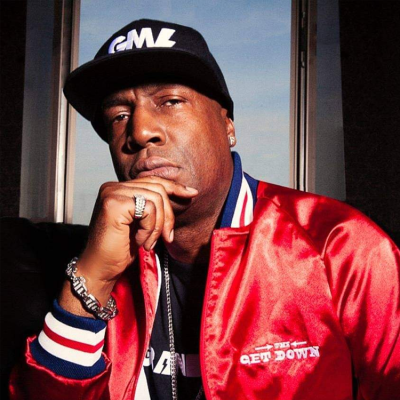








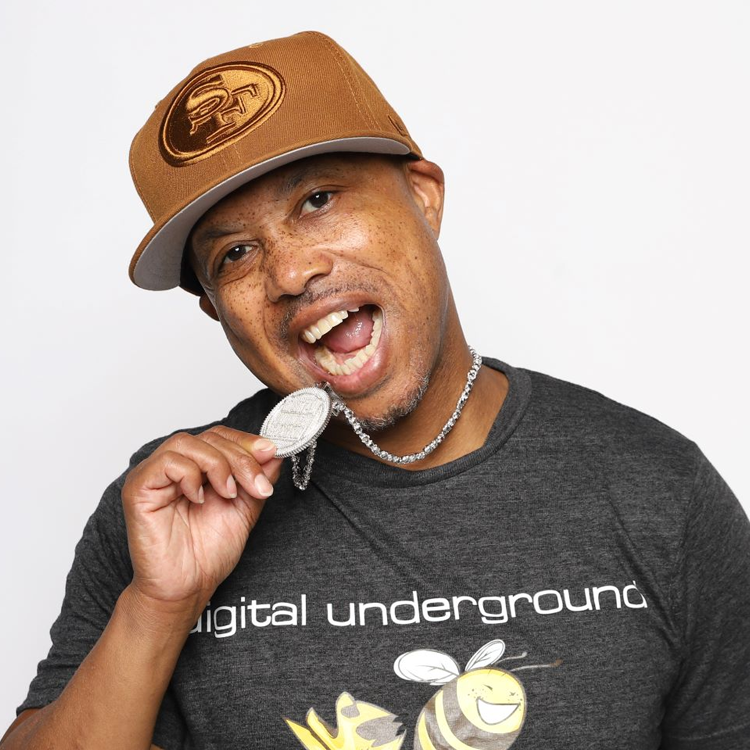


Some stories go beyond the records that made them famous. They live in the friendships, studio sessions, laughter, and creative energy that helped shape hip-hop history. And when it comes to Digital Underground, Money B deserves his flowers.
Born Ronald Brooks in Philadelphia and raised in Oakland, Money B brought a perspective shaped by family, community, activism, and creativity to Digital Underground, the groundbreaking, funk-driven collective led by the legendary Shock G.
With classics like “The Humpty Dance,” “Freaks of the Industry,” “Kiss You Back,” and “Same Song,” which introduced a young Tupac Shakur to a wider audience, Money B was at the heart of a movement that changed hip-hop.
Beyond the records, he helped create the chemistry and camaraderie that made Digital Underground special. Alongside DJ Fuze in Raw Fusion, he also developed his own musical identity while remaining part of a collective built on individuality and collaboration.
Since Shock G’s passing, preserving that legacy has meant more than performing the classics. It’s about honoring his vision, celebrating the family behind the music, and keeping alive the creativity and freedom that defined Digital Underground. Shock G forever. Digital Underground for life.
Today, Money B is writing a new chapter through music, collaborations, performances, and his memoir, “A D.U. Party Don’t Stop: The Money B Story”. From growing up around the Black Panther Party to witnessing Digital Underground’s rise, Tupac’s emergence, and life beyond the spotlight, his story offers a firsthand look at a defining era of hip-hop and the community behind it.
The music continues, and so do the stories. It’s time to revisit the memories, the madness, the music, and the mission with one of the voices who lived it. Because a D.U. party don’t stop—and neither does the story.
Your parents were members of the Black Panther Party, and you grew up in and around that environment. You also attended the Oakland Community Learning Center, later known as the Oakland Community School, founded by Huey P. Newton and the Black Panther Party. How did that upbringing shape the person and artist you became?
My parents were in the Black Panther Party, and I was raised in and around that environment. I attended the Oakland Community Learning Center, or Oakland Community School, which was founded by Huey P. Newton and the Black Panther Party.
Just attending that school and being raised in that environment taught me that I was raised by the village. It was always about what was best for the collective. On top of that, we were taught how to learn, not necessarily what to learn. We were encouraged to ask questions, be inquisitive, do our own research, find out for ourselves, and never be afraid to question anything.
I think all of that played a role in the human being and artist I became, and it influenced how I navigated situations in the music business while growing into adulthood.
You met Shock G and Chopmaster J through a meeting that initially happened because Digital Underground needed a DJ and wanted Fuze to fill that role. You and Fuze were already working together as Raw Fusion. How did that first connection develop into the relationship and musical chemistry that became Digital Underground?
It’s well documented that I met Shock G and Chopmaster J through a meeting that happened when they needed a DJ and wanted Fuze to be their DJ. Fuze was renting a room in my mom’s apartment, and we were already a group called Raw Fusion.
Through that meeting, I got to know Shock. Initially, it was because they wanted Fuze, but as we started doing shows together and spending time around each other, I think we developed an appreciation for what each of us could do.
Shock and Jimmy were a little older than me. Fuze and I were more into boom-bap and the hip-hop of the time. Shock was a little more old-school. He came from that late-’70s wave of rappers, but he was heavily into P-Funk. I think the combination of all of us played a role in what we eventually became.
Digital Underground brought together members from diverse backgrounds and musical influences. How did your different upbringings—from Philadelphia and the Black Panther movement to New York, Berkeley, and Tampa’s P-Funk culture—come together to shape the group’s sound and creative spirit?
We all came from different backgrounds, and that played into what Digital Underground became. It was like a bowl of gumbo, like the song “Oregano Flow.” Everybody threw what they had into the pot.
Even though it was Shock G’s musical vision, we all drew from our experiences and backgrounds. The environment was open to whatever you suggested. If it was dope, it could probably be used.
I think that was a big part of it. Shock was such a huge fan of P-Funk and Parliament, and that music represented a free-thinking, free-form approach, with George Clinton directing the overall vision. Shock G was our George Clinton. We were all doing our thing, and it worked.
I always tell people Shock was a musical genius. I learned so much from him, particularly the way he recorded. I came from being a rapper who loved hip-hop. I wanted an eight-bar intro, 16 bars to rap, an eight-bar hook, and then rinse and repeat.
Shock didn’t approach it that way. I watched him play and sequence a song around whatever he felt. I’d never witnessed that before. His attention to detail during mixing and mastering was incredible. He was a perfectionist who knew exactly what he wanted in the studio and wouldn’t rest until he got it. At the same time, he was open to suggestions.
Watching his creative process taught me a lot. Shock was a deep thinker, kind, and very giving. I think that’s one reason we gravitated toward one another. At the end of the day, most of the members of Digital Underground were—or at least wanted to be—good human beings.
Digital Underground played an important role in Tupac Shakur’s early career. When you first met him, did you recognize the potential for the global icon he would become? Looking back, what does it mean to have been part of that chapter of his story?
When we met Tupac, there’s no way anybody could have known he would become the global icon he did. What we did know was that he was talented, driven, had a great work ethic, and was charismatic from the moment you met him.
With all of that, the sky was the limit. We knew he had potential, but I think we all believed we had that same potential. It was great to work within a collective where we felt everybody had the talent to accomplish what they wanted.
Looking back, knowing I was part of that history is a great feeling. It’s something nobody can ever take away from me or us.
At the same time, I don’t take credit for Tupac’s overall success. I believe he had the talent that, wherever he was and whoever he worked with, he eventually would have broken through. He was that talented, driven, and focused.
But that doesn’t take away from the fact that he came through Digital Underground and that we helped nurture what he eventually became. I’m definitely proud of that.
Before joining Digital Underground, you and Fuze were already building Raw Fusion, which had previously been known as MGM—Money B, Goldfingers, and Mac Mone. Was being part of Digital Underground a departure from your original vision, or was the collective a place where everyone could develop their own projects?
Fuze and I were Raw Fusion before we even joined Digital Underground. Before that, the group was called MGM, which stood for Money B, Goldfingers—Fuze’s original DJ name—and Mac Mone, my best friend and the other member of Raw Fusion.
We weren’t inspired to do something else. Raw Fusion was the original vision for Fuze, Mac Mone, and me. We just happened to come through Digital Underground.
All of us—Raw Fusion, Tupac, Gold Money, even Chopmaster J to an extent, and Shock G’s other collaborators—had visions of doing our own projects. Joining Digital Underground was more like becoming part of a large production team, with everybody coming together to help Shock with his vision.
As an organization, we knew we all had goals of doing our own projects. The goal for Atron [Gregory], Shock, TNT [Management], and the rest of the team was to help everybody get their own deal. It wasn’t a matter of suddenly deciding to do something different. Fuze and I had always been Raw Fusion.
The Bay Area has a rich musical history, from Sly and the Family Stone and Con Funk Shun to Larry Graham, funk, activism, and a culture of independent thinking. How did that environment influence Digital Underground, and do you hear echoes of Humpty Hump’s spirit in the later hyphy movement and artists like Mac Dre?
When you talk about the Bay Area, musically, you can go all the way back to Sly and the Family Stone, the whole thing happening in Haight-Ashbury, Con Funk Shun, Larry Graham, and the funk. It was a vibe. The Bay Area has always been about free thinkers and activism.
Even a song like “Doowutchyalike” reflected that spirit. We do what we like.
As far as influence, I think Mac Dre carried some of the spirit of what Humpty Hump was talking about. “I get stupid, shoot an arrow like Cupid,” being fly, dressing how you want—it didn’t matter how you looked or acted. You were cool. You didn’t care what people thought about you. You could do what you wanted.
When you look at Mac Dre and the hyphy movement, I think you can hear an extension of what Humpty Hump—and even Shock G—were trying to communicate. I’m not saying Mac Dre copied the style or took it directly. I’m saying that the spirit carried through a generation or so later.
Coming up in the Bay, it’s just one of those things. It’s in us, not on us. I can’t explain it to somebody who isn’t from here. We just have it like that.
As you continue performing and representing Digital Underground, how do you make sure Shock G’s vision and the contributions of the entire crew remain part of the story? What responsibility do you feel to carry that legacy forward for the members who are no longer here?
Moving forward, my goal is to carry the Digital Underground legacy properly—not just for Shock G, but also for Cleetis Mack, Schmoovy Schmoov, Saafir, Kenny-K, and everybody else who contributed.
Shock was the one who introduced me to Young Hump. He told me, “Hey, this is the guy who can do it the way you want it done.” He also explained how we would come together and rock as a group.
The current touring version of Digital Underground includes me, Young Hump, and DJ Alwayz. In our shows and in any music I release associated with Digital Underground, I make sure Shock G’s name is never forgotten.
Shock was the visionary, the founder, and the person whose musical vision drove the group. Digital Underground was his baby, and he’s the one we follow. We dedicate a section of our show to Shock and make sure the audience says his name.
I represent the brand, too. I wear the merchandise whenever I get the chance. It’s DU for life.
I also try to represent the remaining members of the crew, including Mystic, Esinchill, Numskull from the Luniz, J-Beats, Pee-Wee, and others, in whatever way I can.
First and foremost, I want to make sure we never forget Shock G, Cleetis Mack, Schmoovy Schmoov, Kenny-K, Saafir, and the others who aren’t here to speak for themselves. I try to be a voice for them and make sure they’ll always be remembered.
“Dumb Out,” featuring Young Hump and produced by The Mekanix, brings together members of the Digital Underground family and that anything-goes energy associated with records like “The Humpty Dance.” What makes this a Digital Underground record in spirit, and why are The Mekanix so important to the Bay Area sound?
To me, “Dumb Out” is a new Digital Underground song. It features Young Hump, who is part of Digital Underground, and 4rAx, who comes from the Digital Underground collective. In the video, you also see Mystic and Esinchill. That’s the DU family. That song and video represent Digital Underground right now.
“Dumb Out” means to bug out. It’s in the same vein as “The Humpty Dance.” It’s like, just act crazy and do what you like. “Dumb Out” and “Doowutchyalike” are saying the same thing.
The production comes from The Mekanix, and to me, they’re the Bay Area sound. If you’re from the Bay and you’ve never gotten a track from The Mekanix or done a song with them, I don’t know if you’ve really been stamped like that.
Everybody I know and respect who has really done it in the Bay has worked with The Mekanix. That’s how important they are to the Bay Area mob-music sound. Put that production together with our energy, and you get “Dumb Out.” It’s cracking like that.
“Underground Business,” your collaboration with EPMD’s Parrish Smith, has a different feel from “Dumb Out” and connects directly to the hip-hop tradition you came up under. How did that collaboration come together, and what did it mean to record with one of your hip-hop heroes?
“Underground Business” is a totally different vibe. It’s a collaboration with one of my hip-hop heroes, Parrish Smith from EPMD—(Erick and) Parrish Making Dollars.
It came about through my man Josh Menza from DCM on Long Island. I was working with them, and I was out there when PMD came through the studio. They played him the track, and for me, it was a bucket-list moment. I never thought I’d record a song with PMD.
We did the track, and it came out dope. Shout-out to DJ Supa Dave, who produced it and did the cuts.
The title is a nod to EPMD’s tradition. If you’re an EPMD fan, you know albums like Strictly Business, Unfinished Business, and Back to Business. We called ours “Underground Business” because it connects Digital Underground with the idea of taking hip-hop back underground, back to the sewer.
It’s representative of the style of hip-hop we came up under in the late ’80s and ’90s. I’m really proud of that track, and it’s getting a great response because we’re busting bars on that thing. We’re doing underground business. Get with it!
Your memoir, “A D.U. Party Don’t Stop: The Money B Story”, takes readers from your childhood around the Black Panther Party through the crack epidemic, Digital Underground’s rise, your connection to Tupac, and the realities of life after early fame. Why was it important to tell your story now, and why do you see it as more than a behind-the-scenes hip-hop book?
I take you through my whole experience, starting with growing up in the 1970s around the Black Panther Party, then being a young teenager in the ’80s as the crack-cocaine epidemic hit our communities.
In the ’90s, I navigated that world while being part of Digital Underground and experiencing the rise to fame. But what happens when your fame starts to fade? You’re still a young man, maybe 25 or 26 years old, but you have a family. How do you navigate that?
I take you through that entire experience firsthand. Rather than making it a tell-all story about backstage access in hip-hop, I consider it an American history story. I’m giving you my firsthand experience of what it was like to be a child in the ’70s, an adolescent in the ’80s, and a young adult experiencing fame in the ’90s—and then figuring out what comes next.
I believe all of us need to tell our stories. People ask why now, and my answer is that it’s always time to tell your story. That applies to everybody, not just people in hip-hop.
If we don’t tell our stories, other people will tell them for us. Speaking from where I come from, in the Black and Brown community, it seems that in this climate there’s an effort to erase our accomplishments and diminish our importance.
If we don’t document our experiences, others can mute our contributions or tell the story differently. It’s important that I tell my story, and it’s important that we all document ours so the generations after us can look back, learn, and read about what really happened.
You can get “A D.U. Party Don’t Stop: The Money B Story”, co-written by Chad Coenson, through the Digital Underground websites, DUMerch.com or DigitalUndergroundT-Shirts.com. You can also get a signed copy from me.
Between the book, new music, live performances, and your efforts to embrace emerging technology, you’re showing that a legacy artist can keep evolving without losing his identity. Tell us about Analog Wishes Digital Dreams and the tap-to-play content card. How does it create a new way for fans to experience your music, learn Digital Underground history, and support your work directly?
I’m always trying to push boundaries, adapt to technology, and show younger artists—and legacy artists from my generation—that there’s no reason to stop. If you have something to offer, keep going.
I have the book, these great singles, and a catalog of music I’ll continue releasing that represents Digital Underground. I’m also staying current with technology.
One new project is a tap-to-play content card called Analog Wishes Digital Dreams. It’s a card, similar to a credit card, that you tap against your phone or another device. It opens a standalone platform featuring a full album of new music.
I’m featuring artists including Krayzie Bone from Bone Thugs, Ras Kass, and Guapdad 4000, along with others. The platform also includes visual content about Digital Underground’s history, as well as real-world experiences and access. If you come to the shows, you can get discounts on merchandise and find new ways to support me.
We come from an era of tangible products. We used to buy CDs, cassettes, and vinyl—things we could hold. I think when you can hold something, it resonates differently. You can sit it down, look at it, touch it, and feel it.
With streaming, everything can become about the algorithm. It goes up and down, and then it disappears. You hear something today, and tomorrow you’re looking for the next thing. The music can wither away into the ether.
I’d rather give people something they can hold, feel, and touch. Whatever I release, I’m always going to try to offer a tangible product. Artists can do that in different ways—sell a T-shirt with a code for a free download, release vinyl with a project, or offer a tap-to-play card.
I believe there’s meaning in having something physical that connects you to the music.
You’ve made it clear that you’re not trying to become somebody else or compete with a younger generation. You’re focused on being Money B, continuing to create, and giving longtime supporters new ways to connect with your work. What’s next, and what do you want people to understand about your journey at this stage of your career?
I’m always trying to move forward and stay current, but never forget who I am or where I came from.
I’m not trying to compete with younger or newer artists. My goal and my whole existence are about being Money B. If you know Money B and you’ve supported Money B, when you see me, you’re going to say, “Yeah, that’s Money B.” I’m not trying to become some brand-new dude.
If you’ve supported our music, you can still support it now. It doesn’t matter how old you are. This whole ageism thing is a joke to me, and I don’t pay attention to it. I keep doing what I do because I enjoy it and I can.
That’s the Money B story. “Underground Business.” We “Dumb Out.” And, of course, “A D.U. Party Don’t Stop”. That’s just the way the story goes. I’m out.